
Good Good Meat in Osaka
 1K+ Views
 100+ Likes
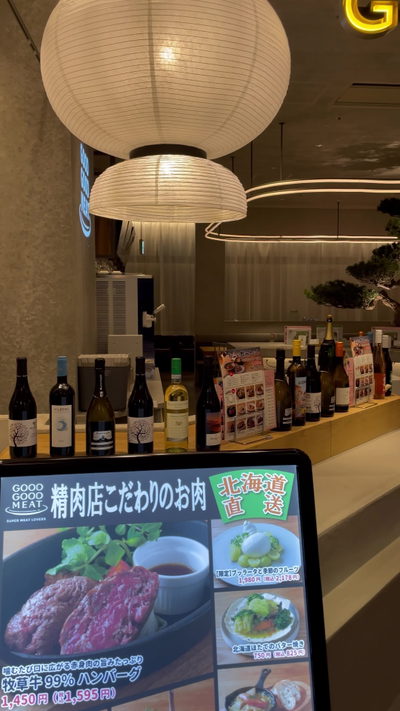
The video opens with a close-up of a Japanese menu board displaying various meat dishes and their prices, immediately establishing a dining context. The camera then smoothly pans up and to the right, revealing the interior of a modern, minimalist restaurant. The space features a sleek counter stocked with wine and sake bottles, a carefully placed bonsai tree, and a prominent illuminated sign that reads 'GOOD MEAT' in bold letters. The overall aesthetic is clean, sophisticated, and intentional, emphasizing quality and ambiance. The only spoken line, 'you,' at the very beginning (0s–1s), appears to be a fragment, possibly from a voiceover or ambient dialogue, but lacks context. The visual narrative focuses entirely on the restaurant’s atmosphere and design, with no human presence, staff interaction, or customer activity visible. The video is static in nature, with no dynamic movement beyond the initial camera pan, and no indication of a specific location, booking process, or visitor action beyond observation. The absence of signage, cultural cues, or contextual details beyond the menu and decor limits the ability to identify the venue as a real-world, bookable experience. The video feels more like a styled B-roll or promotional still than a lived-in, discoverable space.
 1K+ Views100+ Likes
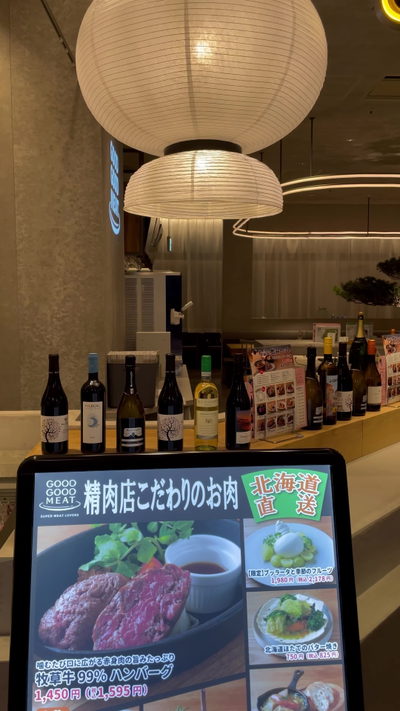
The video opens with a close-up of a Japanese menu board displaying various food items and prices, followed by a smooth pan to reveal a modern, minimalist restaurant interior featuring a counter, stools, and a bonsai tree. The space is characterized by clean white walls, warm lighting, and wooden accents, creating a cozy and inviting atmosphere. The camera movement is deliberate and fluid, offering a comprehensive view of the dining environment. At 0:07, the video concludes with a simple 'ご視聴ありがとうございました' (Thank you for watching) message, indicating the end of the clip. The entire sequence is static and lacks dynamic action, human presence, or contextual cues beyond the visual layout and menu. There is no spoken dialogue beyond the closing message, and no indication of a specific restaurant name, location, or booking details. The focus remains entirely on the aesthetic and spatial qualities of the dining space.
1K+ Views100+ LikesThe video opens with a close-up of a Japanese menu board displaying various meat dishes and their prices, immediately establishing a dining context. The camera then smoothly pans up and to the right, revealing the interior of a modern, minimalist restaurant. The space features a sleek counter stocked with wine and sake bottles, a carefully placed bonsai tree, and a prominent illuminated sign that reads 'GOOD MEAT' in bold letters. The overall aesthetic is clean, sophisticated, and intentional, emphasizing quality and ambiance. The only spoken line, 'you,' at the very beginning (0s–1s), appears to be a fragment, possibly from a voiceover or ambient dialogue, but lacks context. The visual narrative focuses entirely on the restaurant’s atmosphere and design, with no human presence, staff interaction, or customer activity visible. The video is static in nature, with no dynamic movement beyond the initial camera pan, and no indication of a specific location, booking process, or visitor action beyond observation. The absence of signage, cultural cues, or contextual details beyond the menu and decor limits the ability to identify the venue as a real-world, bookable experience. The video feels more like a styled B-roll or promotional still than a lived-in, discoverable space.
1K+ Views100+ LikesThe video opens with a close-up of a Japanese menu board displaying various food items and prices, followed by a smooth pan to reveal a modern, minimalist restaurant interior featuring a counter, stools, and a bonsai tree. The space is characterized by clean white walls, warm lighting, and wooden accents, creating a cozy and inviting atmosphere. The camera movement is deliberate and fluid, offering a comprehensive view of the dining environment. At 0:07, the video concludes with a simple 'ご視聴ありがとうございました' (Thank you for watching) message, indicating the end of the clip. The entire sequence is static and lacks dynamic action, human presence, or contextual cues beyond the visual layout and menu. There is no spoken dialogue beyond the closing message, and no indication of a specific restaurant name, location, or booking details. The focus remains entirely on the aesthetic and spatial qualities of the dining space.

